
Floor Care for High-Traffic Retail Spaces: What Scrubbing, Polishing, and Burnishing Actually Do
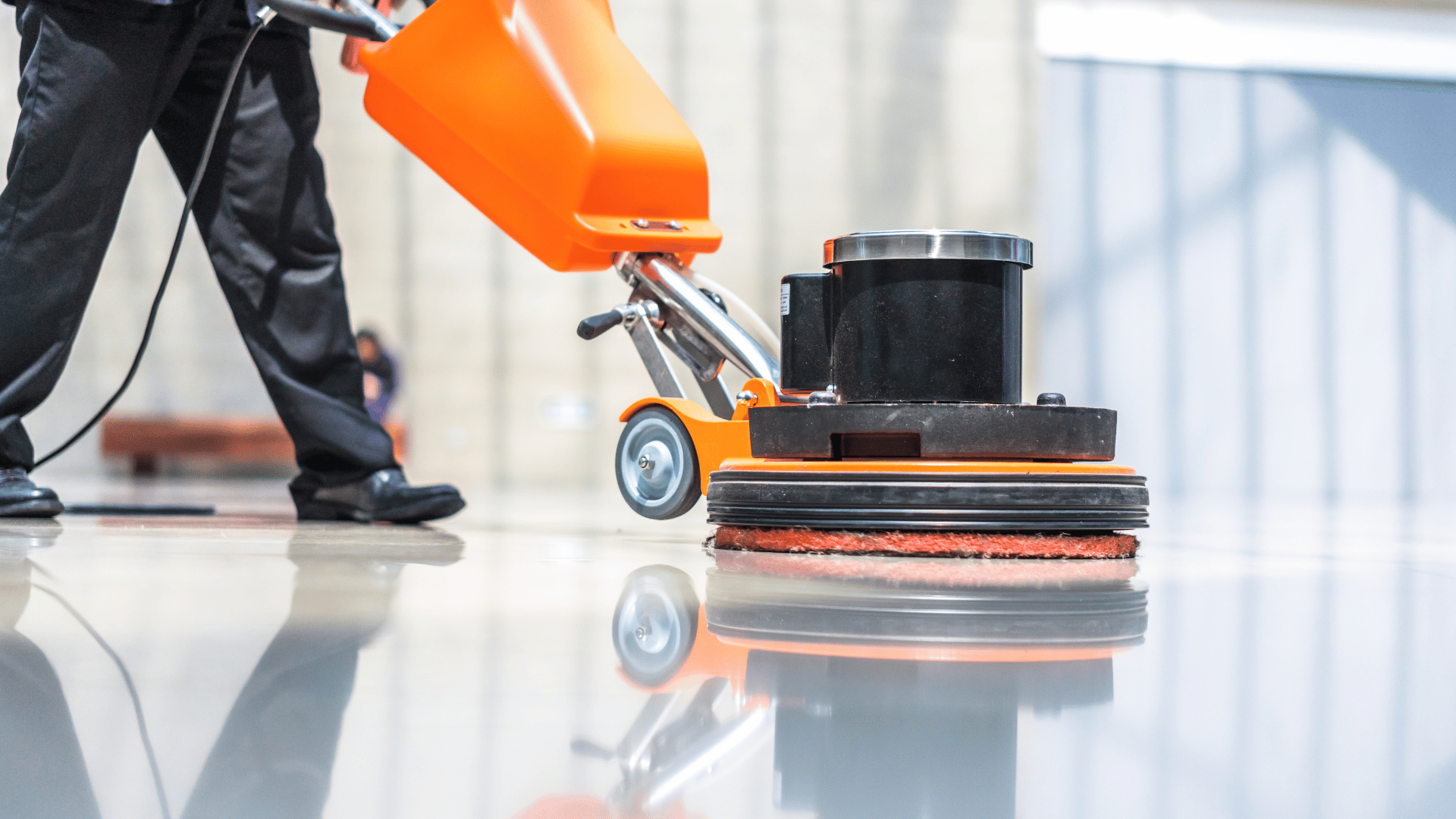
Walk the floor of any well-maintained retail environment and you’re seeing the results of a deliberate floor care program — one that goes well beyond basic mopping. High-traffic retail floors endure significant daily stress: foot traffic, cart wheels, display fixtures, spills, and the constant abrasion of customer movement. Keeping them looking and performing at brand standard requires the right processes, equipment, and frequency.
Three terms come up consistently in professional floor care: scrubbing, polishing, and burnishing. They’re related but distinct, and understanding what each does helps facility managers and retail operations teams make informed decisions about their floor care programs.
Machine Scrubbing: The Foundation of Clean
Machine scrubbing is the core cleaning process for hard floor surfaces — tile, vinyl, sealed concrete, and similar materials. An automatic scrubber applies cleaning solution to the floor, agitates it with rotating brushes or pads to break up soil, dirt, and residue, and then vacuums up the dirty solution in a single pass.
The result is a genuinely clean floor — not just a surface that looks clean but retains embedded grime. For high-traffic retail floors, regular machine scrubbing removes the buildup that mopping alone can’t address. The frequency depends on traffic volume, but most active retail environments benefit from scrubbing at least weekly, with higher-traffic flagship locations sometimes requiring more frequent cycles.
Machine scrubbing also prepares the floor surface for subsequent treatments. A properly scrubbed floor accepts polish and finish more evenly and achieves better results than one that was only mopped.
Floor Polishing: Restoring the Finish
Floor polishing applies a finish product — sometimes called floor wax, though modern formulations are more sophisticated — to the cleaned floor surface. The finish creates a protective layer over the floor material that resists scratching, scuffing, and moisture penetration while producing the reflective, appealing appearance associated with well-maintained retail floors.
Polish application is a skilled process. Uneven application produces visible lap marks or dull patches. Applying over an inadequately prepared surface produces poor adhesion and premature wear. The number of finish coats applied affects both the level of shine and the durability of the protection.
In a professional floor care program, polishing is typically done on a less frequent cycle than scrubbing — often monthly or seasonally depending on traffic — and may involve stripping the old finish entirely before reapplication to prevent buildup that yellows and dulls over time.
Burnishing: The High-Gloss Step
Burnishing is the finishing touch in a comprehensive floor care program, and the step that produces the mirror-like ‘wet look’ shine associated with premium retail environments. A burnisher uses a high-speed rotating pad — typically 1,500 to 3,000 RPM — to generate friction heat that melts and smooths the top layer of floor finish, creating an exceptionally reflective surface.
Burnishing doesn’t clean the floor or apply finish — it refines the existing finish to its highest level of gloss. It’s typically performed after polishing and can be repeated between full polish cycles to maintain shine. For flagship and destination retail locations where floor appearance is a brand statement, regular burnishing is part of the standard program.
Why the Right Equipment Matters
Professional floor care outcomes depend significantly on equipment quality. Consumer-grade or entry-level commercial equipment produces different results than professional-grade machines — slower, less consistent, and less effective at the deeper cleaning and finishing that brand-sensitive environments require. At Stasia Group, we invest in advanced equipment appropriate for each surface type and service level, because the results your floors achieve are only as good as the tools and technique behind them.
Building the Right Program for Your Locations
There’s no single floor care program that fits every retail environment. The right program depends on floor surface type, traffic volume, location type (everyday retail vs. flagship vs. outlet), and brand standards. A basic essential service tier may include monthly scrubbing and polishing. A premium program for high-traffic flagship locations may add burnishing cycles, enhanced detailing, and more frequent service visits.
Stasia Group structures our floor care programs around your specific locations and standards — not a one-size-fits-all schedule. Our service plans are designed to be right-sized to each environment, from standard commercial locations to brand-sensitive flagship stores.
Final Thoughts
Your floors are one of the first things customers notice when they walk into your store, and one of the last things most facility managers think about strategically. A well-designed floor care program is a genuine brand asset. Invest in it accordingly.
Ready to simplify your facility operations? Request a custom proposal from Stasia Group at (708) 729-8020 or stasiagroup.com/contact-us